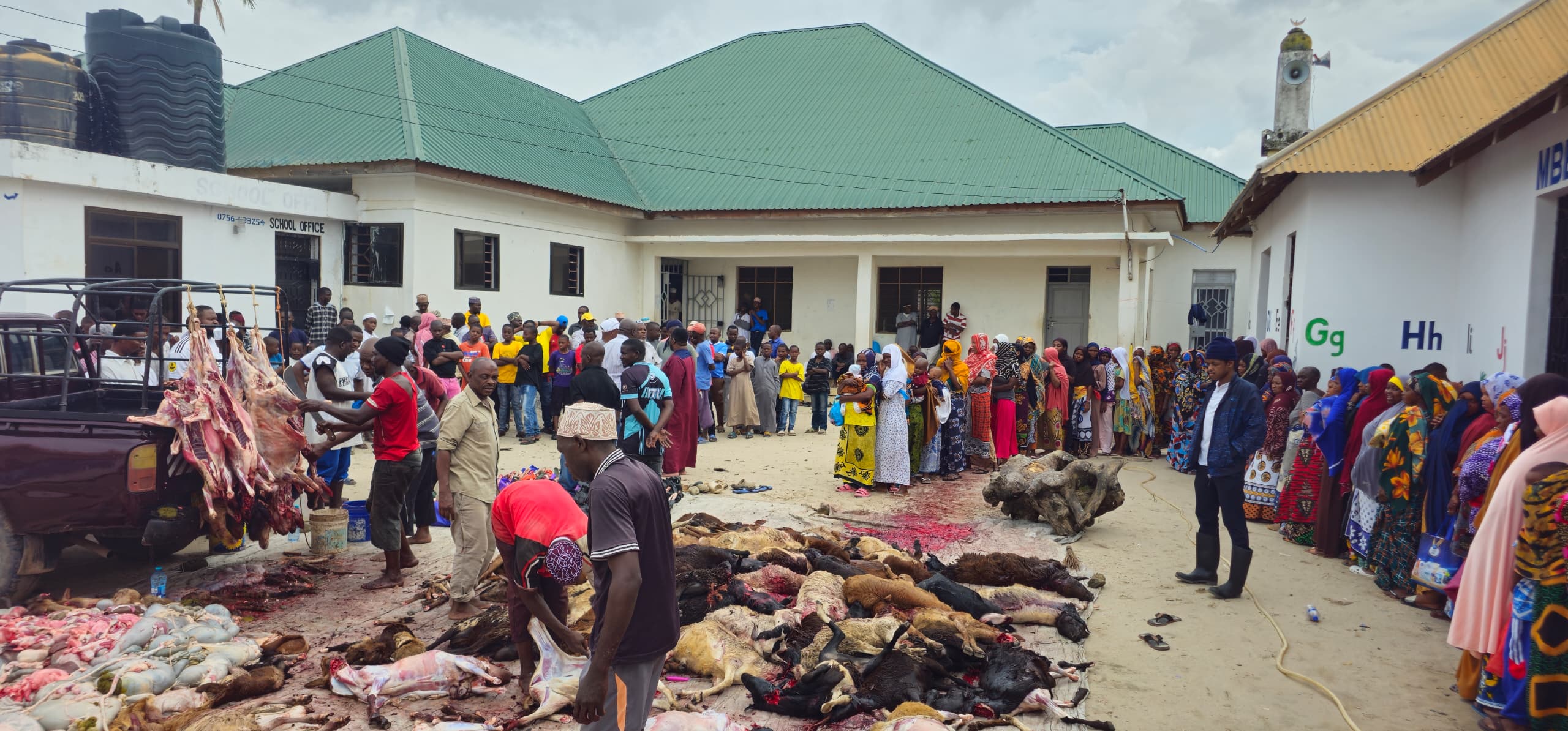
Eid al-Adha, the Festival of Sacrifice, is one of the most significant holidays in Islam, marked by the act of Qurbani— the ritual slaughter of animals such as sheep, goats, or cows. This tradition commemorates Prophet Ibrahim’s (Abraham’s) unwavering faith and willingness to sacrifice his son for Allah. The meat from these animals is divided into three equal parts: one for the family, one for relatives and friends, and one for the less fortunate. In many communities, this isn’t just a religious duty; it’s a powerful act of charity that feeds the hungry and strengthens social bonds.
This year, the Qurbani meat distribution at Hamidiye Mwanza in Tanzania stood out as a shining example of community spirit in action. Held at the historic Hamidiye Mosque in Mwanza, the event brought together hundreds of volunteers, donors, and beneficiaries to ensure that the blessings of Eid reached everyone. Let’s explore the details of this heartwarming initiative, from preparation to impact.
The Significance of Qurbani
Qurbani is obligatory for Muslims who meet certain financial criteria, typically those whose wealth exceeds a threshold (known as nisab) and who can afford to sacrifice an animal. The process must adhere to Islamic guidelines: the animal must be healthy, slaughtered humanely by a Muslim butcher using a sharp knife, and the name of Allah invoked during the act. This ensures the meat is halal (permissible) and spiritually pure.
Beyond the ritual, Qurbani promotes social welfare. By distributing meat to the poor, it addresses food insecurity and fosters empathy. In regions like Mwanza, where economic challenges are common, such distributions can make a real difference during Eid celebrations.
Organizing the Event at Hamidiye Mwanza
Hamidiye Mwanza, a prominent mosque and community hub in Tanzania’s Mwanza region, has been a center for Islamic activities for decades. The Qurbani event was organized by the mosque’s committee in collaboration with local charities, drawing support from donors both within Tanzania and internationally.
Preparation and Logistics
Animal Procurement: Over 100 animals, including 50 cows and 50 sheep, were sourced from local farms. Donors contributed funds to purchase them, ensuring ethical sourcing and fair pricing.
Slaughter Process: Certified butchers performed the slaughter in a designated area on the mosque grounds. The process followed strict halal standards, with prayers recited and the meat inspected for quality.
Portioning and Packaging: Volunteers divided the meat into portions—typically 1-2 kg per family—using clean, hygienic methods. Each share included a mix of cuts like ribs, legs, and offal, packaged in plastic bags for easy distribution.
The event spanned two days, starting early in the morning to accommodate the large turnout and ensure freshness.
Community Involvement
Volunteers played a crucial role, from setting up tents to registering beneficiaries. Many were mosque members, but others joined from nearby neighborhoods, turning the event into a communal effort. Donors included local businesses and expatriate Tanzanians, with some contributions coming through online platforms.
One volunteer, Amina Hassan, shared: “It’s not just about giving meat; it’s about sharing joy. Seeing families’ faces light up makes all the hard work worthwhile.”
Distribution and Beneficiaries
The distribution was methodical to avoid chaos. Beneficiaries, including widows, orphans, and low-income families, registered in advance or on-site. Each received a share, along with dates or other treats to enhance the Eid experience.
In total, the event distributed approximately 5,000 kg of meat to around 2,500 families. This not only provided nourishment but also allowed recipients to partake in traditional Eid meals like biryani or grilled kebabs.
Impact and Challenges
The event’s impact was profound. For many in Mwanza, where poverty affects a significant portion of the population, this meat meant the difference between a meager Eid and a festive one. It also promoted environmental awareness, as organizers emphasized sustainable practices, like minimizing waste through donations to animal shelters.
Challenges included logistical hurdles, such as transporting animals in a rural area and managing crowds. However, the community overcame these with planning and cooperation. No major incidents were reported, thanks to experienced coordinators.
Photos from the event captured the essence: children smiling as they carried their shares, elders offering prayers, and volunteers working tirelessly.